Friday, December 28, 2007

BAREILLY BAMBOO FURNITURE

BAREILLY, standing on the river Ramganga, is a metro city in the Indian state of Uttar Pradesh.
This fast growing city is also known as Bans-Bareilly, due to its big bamboo market. Bareilly is a famous manufacturing place of furniture and for the trade in cotton, grain, and sugar. Bareilly is also known as the counter magnet city because it is equidistant from New Delhi and Lucknow and has a lot of potential for setting up industries to attract people to settle. It is one of the biggest city of Uttar Pradesh state.
Bareilly is famous for its surma (eye liner) and furniture of shisham and bamboo sticks.
Bareilly is renowned for Kites and string specially made to fly the kites. The industry related to Zari work on cloth is also notable.
Historically it was the part of ancient kingdom of Panchal. In the Medieval period it was under the Rohillas. Mukrand Rai laid the modern city’s foundation in 1657.
Perhaps, Bareilly is best known for Indian Veterinary Research Institute, finest University in Veterinary Sciences and Central Avian Research Institute.
Bareilly’s proximity to the picturesque, charming and quaint hill stations of Uttar Pradesh and Uttrachal, make it the ideal transit point for tourists.

Friday, December 21, 2007

BUNDI – UNDISCOVERED SPLENDOUR

BUNDI , a small town in Indian state of Rajasthan , 36 kms from Kota, was once ruled by Had Chauhan, is surrounded by Aravalli Hills on three sides and a massive walls with four gateways.
Bundi , one of the unexplored cities of interests , has many monuments, medieval forts, palaces, havelis, temples with beautiful stone idols and a picturesque lake in the heart of the town.
Such Mahal Palace, a magnificent palace for the kings to enjoy the coolness, built on lake, amid lush surroundings of garden is a major point of tourist attraction. Rudyard Kipling stayed here and his experience is reflected in Kim.
Taragarh or the Star Fort, perched on thickly wooden hill is one on the most impressive forts of Rajasthan with a lake which served as water supply for the fort.
Chitrashala or Gallery of Pictures, a fascinating pavilion and a gallery of miniature murals, elaborate colorful paintings depicting the story of Radha Krishna.
Shikar Burj was a hunting lodge for rulers, set amid the forests.
Bundi has 66 cenotaphs, and number of step wells, which served as the water supply of olden times.
This little town has its retained its medieval touch not exactly attracting crowds of tourists but has an appeal for curiosity of the visitors. With no funds for renovations of the old monuments this town is in crumbling state of despair.

Saturday, December 15, 2007

AMRAVATI – CITY OF FIRST WOMAN PRESIDENT OF INDIA, SAU. PRATIBHATAI PATIL

AMRAVATI in the Indian state of Maharashtra, is165 kms from Nagpur, is amid the cotton growing region of Wardha region.
Amravati is famous for the historical temples of Shri Ambadevi and Shri Ekaviradevi.The temples are at the center of the town at Gandhi Square. During Navaratri various religious and cultural programs are held and people from all walks of society come and enjoy here.
Amravati is famous for the tourist for Melghat Tiger Project and Chikhaldhara Valley.There is enough arrangement for the tourists to visit the Melghat Forest Sanctuary.Tigers Leopards Gaurs and Sambars are the major animals in this forest sanctuary.
Amravati is famous for yet another thing, Shri Gulabrao Maharaj, Sant Tukadoji Maharaj and Gadge Baba all were from Amravati.Amravati is a major education center for the medical sciences and engineering colleges.
Amravati major economy is cotton and cotton mills related.
The first woman of India, Smt. Pratibhatai Patil is from Amravati.
Tapovan, an institution for re-habitation of the leprosy affected persons is also situated at Amravati.The local tourism also actively sponsors the Para gliding festivals and training at Chikhaldhara valley.
The nearest rail head is Badnera which is on BombayNagpur lines.

Monday, December 10, 2007

BELGAUM ---- COTTON AND SILK WEAVERS

BELGAUM in the North West in the Indian state of Karnataka, a state full of many interests for tourists.
Busting of colours, a typical example of south Indian styled, Belgaum is a fast developing city.
Belgaum has a rich past; it had been ruled by Chalukya, Bahmani and Maratha rulers. The rulers have left their visual signs in the architecture in the old Belgaum.
Belgaum has apparently divided into two sections, the old city where the visitor can still watch the artisan weaving the cotton and silk clothes on hand looms in old styles.
The other portion which was designed by British has systematic lines and rows of roads and houses; this portion was developed by British as their camp area. This part of city is now fast developing.
The Belgaum is well-known for its Belgaum Fort which is a major attraction. The original fort made of mud and stone structure was built by Rana Dynasty in 13th century. However the passage of time, Belgaum was ruled by Vijayanagar rulers, the Bijapur rulers, the Marathas, and finally British. Every ruler had contributed their unique architecture to this fort.
In side the fort the visitor shall find the real secularism, the Hindu Deities and the mosques of Muslims side by side.
Kamala Basti has a famous temple of Jainism, in which a famous lotus has been carved out is yet another attraction.

Thursday, December 6, 2007

PANAJI – ENTRANCE TO GOA – CASHEW NUTS AND SPICES.


PANAJI or Panjim in Portuguese is the river front town (Mandovi River) in the Indian state of Goa. Formerly this town was named as Nova Goa during the Portuguese.
Until however, 1961 Panaji was a colonial state, the Operation Vijay was undertaken by Govt of India and Panaji and the surrounding geographical area was merged with Union of India.
Panaji is out of the three major cities of Goa, Vasco, Margao and Panaji.
Panaji is well placed city for the tourists to start the tour of Goa.
There are several small villages , the roads full of greenery , the tourist start their tours of various beaches and the pilgrims starts their pilgrimage tours of the temples which are in the near by towns by hiring taxis from here.
Panaji is well known place for the shoppers, especially the 18th June Road, which is a mall , here one purchase so many authentic cashew nuts, spices , which are exported to all over the world and India.
Miramar beach is yet another local beach, very clean beach maintained by the Tourist Dept.
Visitor can enjoy the long horse riding along the beach, as well scooter boat riding.
Panaji is considered a top tourist attraction for Indians as well as foreigners.
There are number of 5 star and 4 star hotels here.
The nearest railway station is Vasco, which is connected to major cities of India.
The houses and the churches of Portuguese influence can still be seen here.

Friday, November 30, 2007

AKOLA – COTTON CITY

Akola in the Vidarbha region of Indian state of Maharashtra is best known as cotton city due to the abundant cultivation of cotton and cotton mills. It is largest cotton producing region of India.
Akola region was the capital of legendary king Vidarbha, who has some mentions in the holy book of Mahabharata.
Akola had many rulers, right from Mayuran, Yadavas, Muslims and British till it became the integral part of India after independence.
The history can still be visualized, there are some forts still can be seen like Narnala Fort, Akot Fort, Akola Fort and Belapur Fort.
Akola popularly known as cotton city is also a major producing center of Dal (Pulse) and oil.
Akola lies on the Tropic of Cancer, and therefore, even during hot season the nights are cold.
Akola is well –known for advanced medical facilities, especially, Elizarov technique and IVF.
Sheagaon another pilgrimage place is just 45 kms from Akola.
Raj Rajeshwar temple is famous for pilgrims.
Akola has its own airport namely Shivani airport.
Akola is on the main railway route of BombayNagpur railway lines.

Monday, November 26, 2007

ANANTPUR --- PUTTAPARTHI AND BELUM CAVES

Anantpur or Anantapuram as is known in vernacular local language is in the Indian state of Andhra Pradesh. Anantpur is also the home town of former Indian President Neelam Sanjiv Reddy.
Though Anantpur has not many places locally, except the Anantpur Tower Clock which was built during the independence days, there are any many places of interests near Anantpur.
Lepakshi temple, 15 kms from Anantpur, Lepakshi means temple of blinded eye. The story is that Virupanna, a treasurer executed the plans of temple spending the treasures of the Vijaynagar King, and who was subsequently punished to blind his eyes, the two black spots can still be found on the walls of Kalyan Mandaps.
The beautiful sculptures on the prakaram are Lord Shiva’s 14 forms, a notable example of Vijaynagar style of architecture.
Another visiting sight is Belum Caves, 85 kms from Anantpur, 3229 length (mtr) , with long passages, spacious chambers, fresh water galleries and siphons. The deepest point is 120ft from entrance level. These caves formed by erosion of the lime stone deposits millions years ago, were used by Jains and Buddhists monks for spiritual developments. Tourism dept has some arrangements for restoration and maintenance of the caves for the convenience of the visitors, moderate dormitory type of accommodation is also available near caves site.
Puttaparthi , 97 kms from Anantpur is the home of Shri Sathya Sai , the “ Godman “ who preaches the universal religion, love and service to the mankind, with vast number of devotees from all over the world.
Thimmamma, 100 kms from Anantpur has a banyan tree with its branches spread over 5 acres; this tree has been recorded as the biggest tree in the Guinness Book of World Record 1989.

Friday, November 23, 2007

KOLHAPUR--- RELIGION, CHILLIES AND JAGGERY

Kolhapur, a district place and a small city in the southern part of Indian state of Maharashtra, is a place known more as an entry to Konkan, the western sea-shore of India.
The city situated on the banks of river Panchganga, is famous for its ties to Maratha rulings in the Indian history.
It is here that one of the most prominent temples, The Mahalaxmi Temple, the one of the Shakti Piths, the place of Goddess of Power, is situated. The temple architecturally built in Chalukya era in 700 A.D. is a famous place of visit for all Hindus.
During British Raj, Kolhapur was a princely state, and later became after independence of India, the part of Bombay State.
But Kolhapur, apart from this temple, is a well-known place for three more things.
Kolhapur Chillies, Kolhapur Jaggery a type of unrefined sugar typically used in India, and Kolhapuri Chappals a half-way footwear a footwear that resembles the slippers.
Soil of Kolhapur is very suitable for sugar-cane cultivation, raw material for sugar, jaggery and alcohol.
Another field that Kolhapur has its unique contribution is films particularly Marathi films, a regional language of India. Since Kolhapur has hilly regions and moderate atmosphere the scenic beauty provides the best location spots for films.
It is from Kolhapur, that films stalwarts like Bhalaji Pendarkar, Baburao Painter and the most prominent V. Shantaram started their careers.
The Panhala Fort of Shri Chhatrapati Shivaji, the Great Maratha, is just 1 hours journey from Kolhapur, a type of hill station developed for tourism, the bus and taxis are available from Kolhapur. A tourist should feel comfortable here staying and wandering in hilly treks.
Kolhapur is one of the highest per capita income cities in India, it is reported that Kolhapur has highest number of Mercedes cars, second only to Bombay.
The New Palace of Kolhapur has museum of weaponry, robes, and artifects of Maratha era.
Kolhapur has many hotels suitable for the foreigners for staying and foods.
Kolhapur is a major railway station and daily trains from Bombay are available. The nearest air port is Ujalaiwadi (13 kms) from where flights for Bombay are available.

Monday, November 19, 2007

AYODYA—NOT TO BE WARRED AGAINST

People from all the over the world who are interested in Hinduism, must have heard the name of Ayodhya. Today a small city lost it’s economic and strategic importance to Lucknow and Kanpur, but it was not like this always.
Ayodhya is most ancient and was most magnificent town, it was capital of Hindu Kingdom, Kosalya, the sitting place of King Dashrath, who was father of Lord Ram the sixth Avatar of Lord Vishnu. In Sanskrit the name Ayodhya means one should not dare a war against this country or place.
Ayodhya is predominantly city of temples, here the important saints of Hindus, Jains, Buddhists, were either borne here or they took their spiritual journey from here.
Ayodhya, in the British era, was capital of Awadh State, is now in Faizabad Dist of Uttar Pradesh in India, situated on the right bank of River Sarayu, and is linked to all major cities of India, by road and rail, nearest air ports is Lucknow and Allahabad.
Ayodhya is not only deeply associated with Hinduism since Lord Ram is said to have borne here, it is also the city where Five Thirthakars including the First Thirthakar Shri Rishabh Dev , the founder of Jainism, was borne.
During the Maurayan Empire and Gupta Dynasty , Buddhism had flourished in Ayodhya, and visitor can still see number of Buddhist temples, monuments and presently so many learning centers of Buddhism here, if you wish to learn Buddhism , you must take your lessons here.
But this is not enough, Ayodhya has Thai connection, the Thai Kingdom and city of Ayutthaya, has direct relevance to Ayodhya, it is from this place that a princess had traveled in 11th century to Korea to become the first queen of King Geumgwan Gaya , and who is directly linked as being ancestor of Korean line of monarchy.
Ayodhya is now worshipped as the Ram Janmabhoomi and Hindus from all the India and world come here to pay their respect.
On and off in the news, Ayodhya has many hotels serving the needs of people.

Wednesday, November 14, 2007

AMBER--- HISTORY AND FUN OF ELEPHANT RIDE.

Amber, in the Indian state of Rajasthan, with the scenic entry of this small town-fort at the mouth of a rocky mountain with a lovely lake, has always attracted visitors from all around the world.
Amber is just 11 kms from Jaipur, another city of interests for the tourists.
Founded by Meena Raja in 967A.D. but the much architecture was built by Raja Man Singh in 1600. Jai Singh I and II added some other architecture.
Am elephant ride is available for the tourists thru the steep ramp to add the joy of picnic.
The fort has been built in white marble and red sandstone, with the lake in the foreground giving clear reflection of the fort which is very fascinating.
Amber fort has many building which one must see but the most notable are,
The Diwane E Am or House for Commons, where the king Mirza Raja Man Singh I listened to the complaints and difficulties of the common people. The hall has 40 pillars which have some of the best craftsmanship of Rajput – Mogul style. The southern part has been kept reserved for the royal women named Zanana House, so that they could also watch the proceedings of the meetings.
Diwane E Khas the hall for the privileged, another rich architecture, here the rulers listened and took advices of his inner-most Sardars and the royal guest would be received here and be entertained. The major attraction is the miniature colored glass murals.
Ganesh Pol and Suhag Mandir both are beautifully painted, from where the visitor has to proceed to Charbagh, a garden of Mogul pattern.
Have a rambling in the old city beyond the fort, and see some of ruins of the majestic building, with step wells, and temples, a journey in to past.
Jaipur is just 11 kms away and tourists’ buses and taxis etc are available, in fact all major hotels arrange a tour to Amber Fort with guide

Sunday, November 11, 2007

ALWAR - TIGER GATE OF RAJASTHAN

Alwar a city in the Indian state of Rajasthan is enclosed by Aravalli hills.
The city has flourishing jungles around the hills, lakes and a first sight image of being carved out of rocks. The jungles and the basin is home of numerous types of birds and animals.
The city and places nearby have many forts, palaces, temples with intricate decorations that make Alwar a delightful architectural wonder.
Alwar founded by Maharaja Pratap Singh in the second half of the 18th century, was formerly known as Ulwar but a king changed the name simply for the purpose of brining it on the top of alphabetical order of names of the cities.
Although Alwar has many historical and interesting sites, Alwar is best known for The Sariska Tiger Reserve which is located in Aravalli hills is only few kms from Alwar.
Sariska tiger reserve was formerly the hunting place for the kings of state of Alwar, but after independence of India, it was declared as wild life reserve and is covered under project tiger.
Sadly, however as per the census of 2005 there are no tigers left in the jungles. The jungle however has number of other wild creatures like leopards, jungles cats, hyenas, jackals, sambar and chowsingha.
This reserve has some other temples of 9th and 10th century namely Neelkanth Mahadev Temple and Garh Rajor. The Kankawadi Fort is located near the centre of the reserve.
Bala Quila is the fort in the Alwar standing on 300 meters steep cliff; nobody knows who built it because it was built even before Moguls came to India.
Alwar is famous for terracotta statues, carpets, shoes, bangles and pottery. There are various bazaars, mainly, Bazaza Bazaar and Saraf Bazaar.
Alwar is 160 kms from Delhi and 150 kms from Jaipur, both are linked by air to other important cities.
There are many hotels for the budgeted but the luxury hotel Neemrana Fort Palace hotel built by restoring the ruins of the fort is very interesting.

Thursday, November 8, 2007

AJMER ---PUSHKAR & DARGAH SHAREEF

Ajmer formerly known as Ajaya Meru was established by Raja Ajay Pal Chauhan in 10th century. He established the Chauhan dynasty, since then Ajmer had many rulers Moguls, Marathas, British, and is now the integral part and town in the Indian State of Rajasthan.
Although Ajmer is major town place, the city is best known for two important things.
PUSHKAR, a town nearby Ajmer (14 kms), has a temple of Lord Brahma and Pushkar Lake; the place is tourist attractions points and the place of pilgrimage for Hindus. This is the only temple in the whole world of Lord Brahma, Creator of World.
Pushkar is also famous for the camel fair held annually. The Thar Desert is nearby. In fact so many tourists enjoy the camel ride. The desert festival is held here.
And most well known place is Dargah Sareef of Khwaza Moinuddin Chisti a Sufi saint is pilgrimage point for Muslims as well Hindus. The people of both these religions come here to grant their prayers. Mogul emperor Akber the Great was coming here every year of foot in observance of his vow when he prayed for a son to his throne.Taragarh Fort is reputed to be the oldest hill fort in the world.
Ajmer is famous for another thing, the Mayo College, established by Lord Mayo, the then Viceroy of India, especially for the nobles of Rajputana family so that they can be ushered in to able administrators. The main building in white marble is a classic example of Indo- Saracenic architecture a fine mixture of Indian, Muslim and British style of architecture.
The city has mostly wide streets and neat built houses. Although Ajmer is not a major commercial center, it has some significant share in the textile, hosiery, shoes, soap, and pharmaceuticals and poultry farms.

Saturday, November 3, 2007

ALLAHABAD – KUMBHA MELA – THE EXPERIENCE OF LIFE TIME BEGINS HERE.

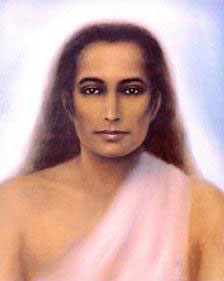
PARAMHANSA YOGANANDA " AN AUTOBIOGRAPHY A YOGI "

Allahabad or Illahabad as the name given by Emperor Akber the Great Mogul who founded the city in 1853, has a history of not years but years when life emerged on earth.
The ancient name is Prayaga meant “place of sacrifice” which Lord Brahma gave when he created the world and offered his sacrifice here.
Allahabad is best know for Kumbha Melas, the venue when saints, sadhus gather here to take bath in the holy rivers of Ganga and Yamuna. Allahabad is a most important place to be visited by Hindus, a must for any Indian during his lifetime, since Allahabad is situated at the confluence of Ganga and Yamuna.
But this is not a place for Hindus only, now days people from western counties are the frequent visitors who are fascinated by the Indian spiritualism and mythology. The saints and sadhus give their lifetime preaching here for Samadhi (withdrawal of Soul from Body)
Mark Twain who visited the Kumbha Mela in 1895 has noted “…. it is beyond the imagianation of our kind of people, the cold whites,,,,,,,)
In fact if one is seriously interested in seeking HIM, then a dialogue with a sadhu or saint who come here only once in 12 years, shall be a very rich experience.
This is the place where famous Paramhansa Yogananda the author of the famous book “ An Autobiography of a Yogi” met his Guru Mahavatara Babaji in a Kumbha Mela.
But Allahabad is famous for yet another thing, it has given 7 Prime Ministers to India, some of them were either born in Allahabad, or were students of Allahabad University or were elected from Allahabad Constituency.
It was from Allahabad that Prince Salim revolted against Akber and held the parallel court, he was later declared the Emperor by Akber , The Great.
Allahabad is directly linked by air to Delhi and other major cities of India, and it is the Head Quarter of Northern Indian Railways.
Flocked by Indian and western all round the year, Allahabad has number of hotels of four and five stars, and hotels for economical budgeted.

Tuesday, October 30, 2007

JAIPUR -- PINK CITY PLANNED WITH ASTRONOMY AND MATHEMATICS

Jaipur or as was know in past Jeypore has history of centuries. It was capital in the past and presently is capital of Indian state of Rajasthan. Jaipur was built and established by Maharaja Sawai Jaisingh II in 1727 with consultation of his Guru Vidyadhar, an architect.
Maharaja Sawai Jaisingh II, himself was learned astronomer and town planner.
The old city has been pained in pink with stucco hence the name Pink City.
The history of Jaipur is that Maharaja Sawai Jaisingh was forced to move his capital from Amer due to population density, and paucity of water.
Jaipur is the first planed city of history, when other cities were built haphazardly with narrow streets and zig- zag roads, Jaipur was built strictly according to rules of architect and mathematics of Hindu rituals and astronomy.
Since Jaipur is very near to Thar Desert the climate is dry but healthy but faces extremes during summer and winter.
Jaipur has many places of interests giving an in-view of culture of Rajasthan and the living style of Kings and people, for the tourists
Nahagarh Palace, on the edge of Aravalli hills overlooking Jaipur now partially in ruins has nine apartments for the king’s nine queens. This fort served as refuge for the Europeans in the Revolt of 1857. From this fort we can have the breath taking view of Jaipur.
Amber Palace, a very popular tourist center, it is an example Hindu and Mogul architects. For the tourist the famous elephants drive is available here.
Jaigarh Fort at the foothills of Aravalli hills is famous for immense underground water tanks and medieval cannon factory.
Hawa Mahal the famous architect for which Jaipur is most popularly known, this building built in the fashion of high rise walls with number of wide windows with staircases. The queens will enjoy the bazaar downstairs on the street thru the windows enjoying the breeze of air at the same time.
With the change of time Jaipur has many industries developed of modern as well as traditional products.
Jaipur is directly linked with Delhi (265 kms.) and other major cities of India.
Since Jaipur is major station for tourist there are number of four and five stars hotels and restaurants for the people from all nations.

Saturday, October 27, 2007

JODHPUR – THE SUN CITY OF INDIA.

Probably everyone from abroad who travels to India shall visit Delhi and then he shall proceed to Jodhpur.
Jodhpur is the one of prominent runner in the tourists’ center in India, an interesting city of rich history, both for Indians and those from other countries especially from western countries.
Jodhpur, a city of beautiful palaces, forts, temples and breath taking desert landscape, is the second largest city of Indian state of Rajasthan, Indian itself being an awesome place of orient culture.
The city is best called as the City of Sun because it enjoys the bright and sunny weather all around the year.
Jodhpur was founded by King Rao Jodha a Rajput Chief in the year 1459 who conquered the surrounding areas in the Marwar and Jodhpur was established as capital of his kingdom.
Jodhpur had since then submitted prominent diplomats and warriors to the Mogul and British Empire.
Although tourism has been the prominent industry of Jodhpur, the other small-scale industries like furniture making, making of utensil and sport goods are developing at a flourishing rate.
Perhaps the best-known product of Jodhpur is Chilies, exported all over domestic and abroad market.
Jodhpur and adjoining Jodhpur there are many places of interests both for the casual tourists and leaning history as well.
Umaid Bhawan Palace, India’s one of most imposing palaces, built with special type of sandstone called Chittar, this beautiful palace is full of beautiful decorative balconies, charming and green gardens, stately rooms where the guests of king were received and entertained and living rooms of Queen and even the maids shall make the visitors spend days.
Mehrangarh Fort, on the outskirt of Jodhpur, most majestic and largest forts of India. The fort walls have some of the remarkable structures. The fort museum has treasure of weaponry, howdahs, cradles, musical instruments and royal furniture. From here one can view the whole of Jodhpur also.
Jasawant Thada, a white marble memorial built in the memory of Maharaja Jasawant Singh II.
Ossian Temple a Jain Temple like all other Jain temple full of Jain sculptures.
Jodhpur, a prominent city being is directly linked with all major cities of India with air, railway and roads.
There are enough restaurants and hotels serving the tastes of all countries and accommodation.
There are guided tours, operated by state govt as well as private operators.
There should not be anything that the visitor of western countries should feel uncomfortable, the people are friendly and co-operative, in fact there are so many tourists wandering all alone on the streets and site seeing places to taste and feel the culture, the best way to enjoy the trip.

Tuesday, October 23, 2007

BHARATPUR –MIGRATORY BIRDS

Bharatpur is a city in the Indian state of Rajasthan; was founded by Maharaja Suraj Mal in 1733.
The city and the fort of Bharatpur were founded in early 17 th century.
Maharaja Suraj Mal the great ruler of this region made Bharatpur a formidable place by building the wall around the city.
But today Bharatpur is well –known for the Keoladao National Park or Bharatpur Bird Sanctuary.
In this bird sanctuary scores of rare birds come here during winter season including the famous Siberian Crane. Over 200 species of birds have made the bird sanctuary as their homes.
Naturally this place of great interest for the ornithologists who stay here for days and months to study and record their studies watching the birds. This is also a place for the great interests for the naturalists who simply love the nature and birds.
The bird sanctuary is a protected place and declared as a World Heritage Site.
The sanctuary hosts the Siberians Crane apart from other birds like shelducks, gulls, shovelers, coots and other common found birds.
Thee are other place of interest too, like Lohgadh Fort ( Iron Fort), built in 18 th century, it withstood the wear of time and attacks of British .
The government museum has traditional artifacts, carved sculptures and ancient inscriptions that tell the story of the culture prevailed here.
Bharatpur palace is a magnificent example of fusion of Mogul and Rajput architectural style.


Friday, October 19, 2007

VARANASI - FINE ARTS AND LITERATURE

Ganga has banked many important cities in India, Varanasi is one of the most leading in them. Varanasi is one of the continually inhabited oldest city situated on the banks of Ganga in the Indian state of Uttar Pradesh.
The city has been religious center of India since thousands of years.Varanasi has it’s own style of Indian classical music school associated with it; Varanasi has produced great philosophers, poets, musicians, dancers and writers.
Regions near Ganga are extremely crowded, narrow winding lanes and road-sided small shops. There are various Ghats built by ancient rulers and present administrations for taking baths by pilgrims. Out of these numerous Ghats, Panchganga Ghat and Manikarika Ghat are famous Ghats. Here one shall find all the glimpse of Indian religion culture.It is considered auspicious in Hindu religion to die in Varanasi. Hence some bodies are cremated on the Ghats, simply known as Burning Ghats.
Varanasi has many famous temples; Vishwanath Temple, Nepali Temple and Durga Temple are very old and famous.
There is immense amount of security around these temples. These temples have history of thousands years.
Varanasi has several small cottage industries, but the silk sari making, hand-woven carpets and handicrafts are most developed. Silks articles made in the looms of Varanasi had adorned the halls of St. James and Vesailles.

Silk and fabrics, brassware, jewellery, woodcrafts, wall hangings and masks of Hindu and Buddhists deities are the shopping favorites of Varanasi.
Varanasi is a good place for learning the classical music and Ayurveda and Yoga, you shall find many scholars here teaching you these ancient branches of culture and science in the Guru-Shish Paramapara.
There are number of 4 and 5 star hotels catering the needs of foreigners here. In fact foreigners are not common here, some of them fascinated by the culture of India, stays here for days and months to elevate their spiritualism or simply wander here to enjoy the culture.
It is a fabulous experience to take a boat ride in Ganga in the evening from Dasaswamegh Ghat to Manikarika Ghat, to see the sunset and view the Ganga Aarti.
Varanasi is well connected to all major cities of India by air, road and railways.

Sunday, October 14, 2007

MADURAI -- THE ATHENS OF THE EAST


MADURAI THE ATHENS OF THE EAST

Madurai often known as the Athens of the East is situated on the banks of river Vaigai, in Madurai dist, Tamil Nadu state.
Madurai has history of 2500 years and has been the capital of Pandya kings of South India. Madurai has hoary antiquity blended with myth. In the early years of Christ there was trade between Rome and Madurai, and Augustus Caesar had entreated the traders from Madurai. Even roman coins have been found at the undisturbed coastal sites.
The city of Madurai was built around Meenakshi temple with rectangular streets named after the names of Tamil months.
Madurai is well connected by air, road and railways. The railways station is one of many busiest railways stations in India.
Madurai has India’s some of the oldest educational institutions. There are colleges of agriculture, medicines, and engineering.
Madurai has many trade streams, chiefly being agriculture based.
But there are some notable trades like fabric pained saris and exporting flowers particularly Jasmine.
Jasmines are exported to Middle East and Singapore where they are used to make perfumes.
But the history of Madurai shall remain half without the mention of Meenakshi Sundereshwar temple which today stands out as the landmark of Indian cultural history. The city itself has it flourishing business developed by tourists crowding to visit this temple. A visitor is fascinated by the paintings and sculptures in the temple.
The temple has the Hall of Pillars, when tapped the pillars give musical notes.

Thursday, October 11, 2007

HYDERABAD - CITY OF PEARLS


Hyderabad the meeting point of south and north India is known for its rich history, culture and architecture is in the Andhra Pradesh in the Telangana.
The original Hyderabad now known as old city was established on the banks of river Mushi.
We can witness here the strong Muslim culture blended with south Indian traditions.
Hyderabad is the financial and economic capital of state.
The economic pattern of the city is trade, transport, storage and communications. The city has a major role in information technology shelters.
Hyderabad is known as the city of pearls. The pearl market known as Laad Bazaar near Char Minar has an immense show of pearls of all sorts. The other bazaars are full of silverware, saris, bangles, paintings and handicraft items.
In Hyderabad we have many old sites, which are to be visited.
Charminar, the landmark of Hyderabad for which Hyderabad is closely associated, Falaknuma palace built by an Italian architect in Louse XIV style, Italian marble staircases and fountains.
Golconda Fort located at the outskirt of the city, a magnificent fortress complex in India.
Chowmahalla palace the sitting place of Nizams where his guests were entertained.
And the most important SalarJung Museum the collections of Nizams the collection include the famous "The Veiled Rebecca" and other huge collections of artifacts dating back to few centuries. A day is not enough here. The different types of arms, robes , and wall pieces, paintings and other traditional Indian and European things that Nizams liked became the treasures here.
Being metro Hyderabad has many hotels serving accommodations and food of international standards.

Monday, October 8, 2007

LUCKNOW - THE CITY OF NAWABS


Lucknow the capital city of Uttar Pradesh (India), historically know as Awadh region, is mostly know as the city of Nawabs or a Constantinople of India.
Lucknow always remained associated with courtly manners, Indian music, gardens and poetry. Today Lucknow is vibrant city witnessing the economic boom.
The history of Lucknow is believed to be associated with Lord Rama who ordered Laxan to establish the city, then Laxmanpuri, which slowly with the passage of time became Lucknow.
Since then Lucknow has been under the regimes of Mughals, Nawabs, and British Raj.
Lucknow has played an important role in the freedom struggle of India.
Lucknow has been a good catchments area for the personnel of information technology.
Lucknow has been traditionally a Mandi town for the sugarcane and mangoes grown locally.
The sugarcane cultivation has attracted small and big breweries for the production of alcohols.
Lucknow is also very popular for chicken a typical section of embroidery, which as attracted fashion designers from the film industry.
Lucknow is directly connected with all stations of importance of India.

Friday, October 5, 2007

DELHI - ALWAYS THE CAPITAL

Delhi or as is popularly known as Dilli is the oldest continually inhibiting cities of India. , and has been capital since centuries for different empires, although it was named differently during each time. Delhi largely became important because it was located on the trade routes from north west India to gengetic plains.
For the majority of the time Moguls ruled from here. It was the throne sitting place and the mogul emperors ruled from here. During the British Raj , New Delhi , was set up by Britishers for the convenience of the space and the administrative offices were set up there.
After India gained independence , New Delhi was declared the capital of India. New Delhi and Delhi are geographically one.
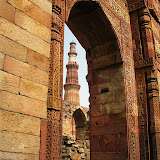
Delhi has many site seeing places. But the most widely know are Qutub Minar and Red Fort.
Qutub Minar is the world's tallest brick minaret.
Red Fort was the sitting place of the mogul emperors.
Delhi is full of ancient site seeing places as well new ones.
Amongst the new one , Lotus temple is worth seeing.
Delhi is connected by air to all internationally to all important cities of other countries and it is the main hub of railway routes connecting all over India.
Delhi itself has metro railway network apart from other traditional means of transportations.There are plenty of five stars hotels to serve the clients from other nations.
It is at the New Delhi that the offices of other nations are situated to serve the passport and other official formalities of citizens of those nations.